The Bible, Aslan, and Trusting God

The Bible, Aslan, and Trusting God
Recently, two things came together to drive a biblical truth further into my heart. The first and main ingredient was Scripture itself, namely Psalm 25:3a. The second ingredient was a couple of connected excerpts from The Magician’s Nephew, one of the books in The Chronicles of Narnia.
Disclaimer
These two ingredients come together for me for two reasons. First, I'm increasingly realizing that my contentment in life is immediately downstream from how much I trust God. That may seem like Christianity 101, and it is. But we all know that just because something is foundational, this doesn’t mean it is easy to get it into our “bloodstream.” The riches of the gospel and its implications take a lifetime to work into us, and even then we are only scratching the surface. The apostle Paul, when considering God’s eternal plan to save both Jews and Gentiles, could only cry out, “Oh, how great are God’s riches and wisdom and knowledge!” (Rom. 11:33, NLT) He had known the Old Testament scriptures his entire life and, at this point of writing the epistle to the Romans, had walked with Christ for a couple of decades. Yet he is in awe as he considers the depth and wonder of God’s purposes in redemptive history.
The inverse way of speaking of the connection between trust in God and my contentment is to point out that I get into trouble when I fail to believe that God is good, that he is always for me, and that everything that happens to me is for my ultimate good. When I am lured into thinking that I need ________ in order to be happy or that I need ________ in order to be secure, God begins subtly to look less satisfying and joy-giving. I start to think that I need Jesus plus fill-in-the-blank.
The second reason Psalm 25:3a and The Magician’s Nephew have come together for me is that, in my counseling of others, I see how central trusting God is. Trusting God is not what makes troubles go away; indeed, the troubles may only increase! But whether a person trusts God determines how they respond to trouble.
Scripture
Psalm 25:3a says, “No one who trusts in [God] will ever be disgraced.” (NLT) The ESV says it similarly: “Indeed, none who wait for you shall be put to shame.” Let’s break that down a bit.
No one. This means that, provided the ensuing qualifier in this verse is met, there will be zero exceptions. There will be no dropouts along the way.
Who trusts in God. This is the qualifier of “no one.” Trusting God is the condition to be met if disgrace is not to have the last word. This doesn’t mean perfect, sinless trust. But it does beg the question, “Which direction am I facing?” Am I ultimately looking to Christ and banking everything on him, or am I putting my stock in someone or something else? Biblical characters such as Abraham, Jacob, and David had their moments when they certainly failed to take God at his word. But their track record also reveals that, in the broad scheme of things, they were looking to God as their hope. They trusted him. And it resulted in obedience.
Will ever be disgraced. “Ever” means it’s not going to happen. No one. Who trusts in God. Will ever be disgraced or put to shame. This doesn’t mean that we’ll never be shamed by others on this earth, or that we’ll never struggle to feel shame for things we have done or things that have happened to us. But it does mean this: that when we trust, believe, and obey God, we will never ultimately be disappointed. In other words, when we make it to Heaven and are with Jesus, we will not for a millisecond look back and think, “What a fool I was to trust!” or “It wasn’t worth the pain and sacrifice!” Not a single Christian. Not once.
Magician’s Nephew
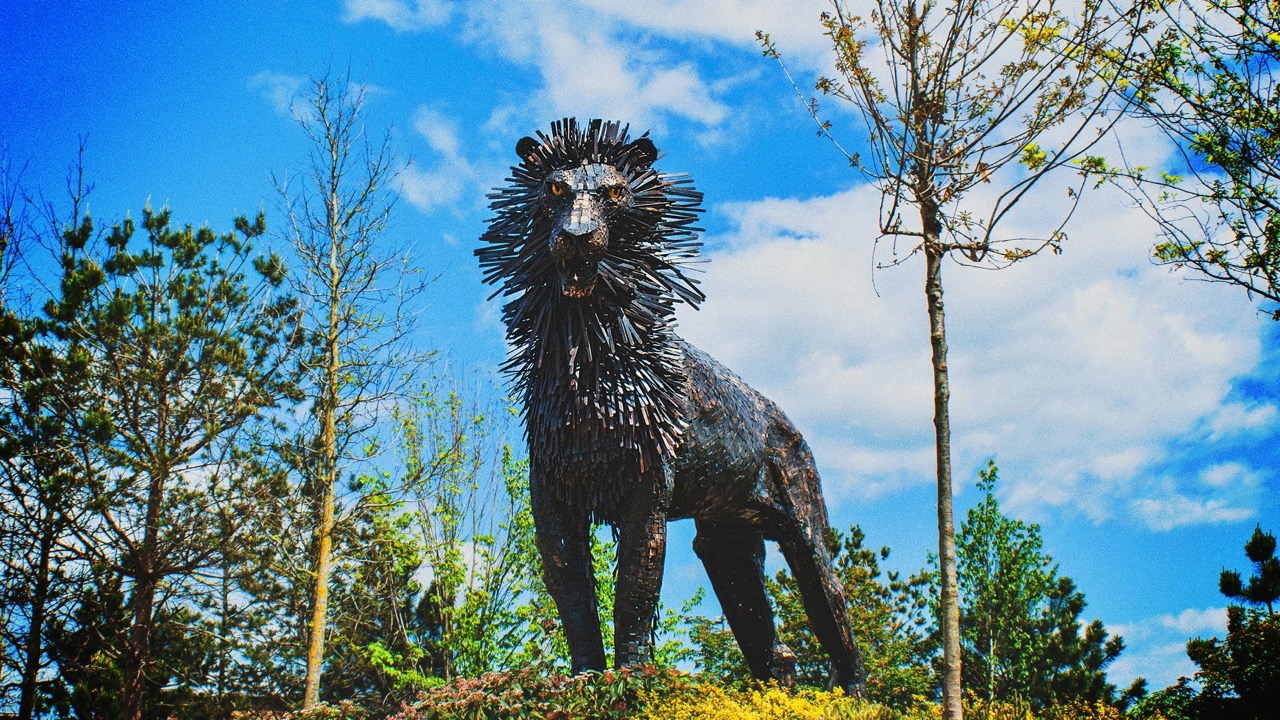
Now, this brings us to this fictional work by C.S. Lewis. Good fiction has a way of taking something “out there” (e.g., the supreme importance of believing God) and making it tangible and concrete. At one point in the story, the main character (a young boy named Digory) is enticed by the evil witch to steal an apple from a magical tree. Anyone who eats the apples from this tree will become immortal. Aslan has instructed Digory to bring an apple back to Narnia, but not to eat from the tree himself. Back on earth, Digory’s mother is dying of sickness. In a manner resembling that of Satan in the Garden of Eden, the evil witch tempts Digory to distrust Aslan.
“But what about this Mother of yours whom you pretend to love so?”
“What’s she got to do with it?” said Digory.
“Do you not see, Fool, that one bite of that apple would heal her? You have it in your pocket. We are here by ourselves and the Lion is far away. Use your Magic and go back to your own world. A minute later you will be at your Mother’s bedside, giving her the fruit. Five minutes later you will see the color coming back to her face. She will tell you the pain is gone…All will be well again. Your home will be happy again. You will be like other boys.”
“Oh!” gasped Digory as if he had been hurt, and put his hand to his head. For he now knew that the most terrible choice lay before him.
Digory’s trust in Aslan hangs on by a thread, and he flees from the witch. What was it that enabled him to hang on, even when his trust was weak? Just a bit earlier in the story, the following exchange occurs between Aslan and Digory:
“But please, please—won’t you—can’t you give me something that will cure Mother?” Up till then he had been looking at the Lion’s great feet and the huge claws on them; now, in his despair, he looked up at its face. What he saw surprised him as much as anything in his whole life. For the tawny face was bent down near his own and (wonder of wonders) great shining tears stood in the Lion’s eyes. They were such big, bright tears compared with Digory’s own that for a moment he felt as if the Lion must really be sorrier about his Mother than he was himself.
“My son, my son,” said Aslan. “I know. Grief is great. Only you and I in this land know that yet. Let us be good to one another.”
In the same way that Aslan was worth Digory trusting, our God is worth trusting. He has proven it by entering into our pain through Jesus and dying the death that we deserved. This doesn’t answer every question we will ever have, but it gives us the answer we need the most. He is trustworthy, and he has proven it. In the end, Aslan tells Digory of all the sorrow that would have befallen Digory and his mother if Digory had obeyed his own desires.
“That is what would have happened, child, with a stolen apple. It is not what will happen now. What I give you now will bring joy. It will not, in your world, give endless life, but it will heal. Go. Pluck her an apple from the Tree.”
Trusting Aslan was bitterly painful when faced with the conniving evil witch. But trust him he did. And in the end, his faith in Aslan was rewarded. We might say that Digory trusted in Aslan, and he was not disgraced. He was not ultimately disappointed. On the contrary, unspeakable joy and fellowship with Aslan were his. The same is true for us when we cling to the Lord.
“No one who trusts in You will be disgraced.” Will you and I look beyond the here and now—into eternity—and believe him? When we’re tempted to guilt our children into obedience. When we feel like we just have to out-shout our spouse or get the last word in. When we think that just one glance at the airbrushed image on the screen will make us happy or give us comfort. When we think that we deserve yet another drink as a reward for a good day. When we’re tempted to check our bank account once again because of our love and loyalty to money. Each of these examples (and countless more) reveals that I think I need those things. I have to do it my own way, because maybe God won’t really take care of me. I’m not trusting God, and my actions show it through a lack of obedience. My loyalty lies elsewhere, or is mixed at best.
Lord, help us to believe you when you tell us that no one who trusts in you will ever regret it in the end. Help us. Help us to entrust ourselves to you and to believe what you have said. We want to believe you. Increase our faith. Increase our dogged commitment to cling in the dark to what we have believed in the light. Amen.